
COMPARISON
Camlock gaskets: Neoprene vs Viton – which one for each application
The gasket is what keeps a Camlock coupling leak-tight. Here is what neoprene can handle, what Viton can handle, which fluids suit each one and when it is time for a new gasket.
In short: choosing between a neoprene and a Viton gasket comes down to two things, the fluid and the temperature. Neoprene suits water at low temperatures, paraffinic mineral oils, refrigerants and ammonia, up to about 121°C. Viton suits fuels, oils, aromatic and chlorinated solvents, up to about 204°C.
A Camlock coupling locks with its cam arms, but it is not the metal that seals. The seal comes from the gasket that sits inside the female half. If the gasket material does not match what runs through the line, the joint will start to drip, however good the coupling is.
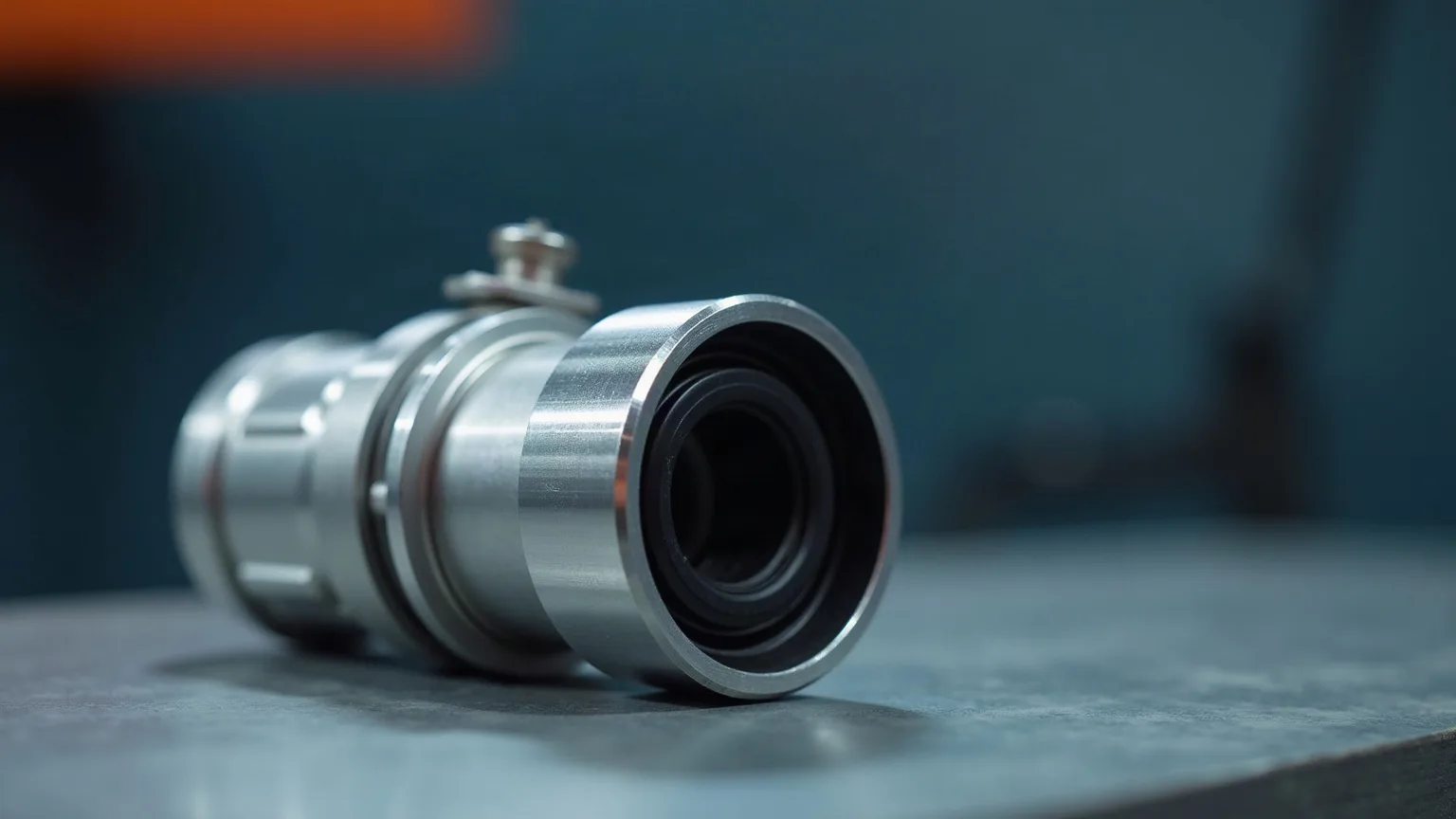
The role of the gasket
The gasket is the only seal in the connection. When the arms close, the male half presses the gasket into the female half, so the fluid has no way out. All Camlock couplings work the same way, whether they are aluminium, brass or stainless steel.
Every time fluid is transferred, the gasket is in direct contact with it. If the material is not compatible, the fluid penetrates it, swells it or softens it, and the seal is lost. The rule is simple: the gasket must be compatible with whatever is being conveyed.
The same test applies to the whole line. A Camlock on a fuel hose needs a gasket that can handle fuel, not whichever one happens to be lying around the workshop.
Both materials are available in the catalogue as replacement Camlock gaskets, together with the female parts they fit into.

CAMLOCK GASKETS NEOPREN
Replacement neoprene Camlock gasket, in every size.

VITON CAMLOCK GASKETS
Replacement Viton Camlock gasket, in every size.
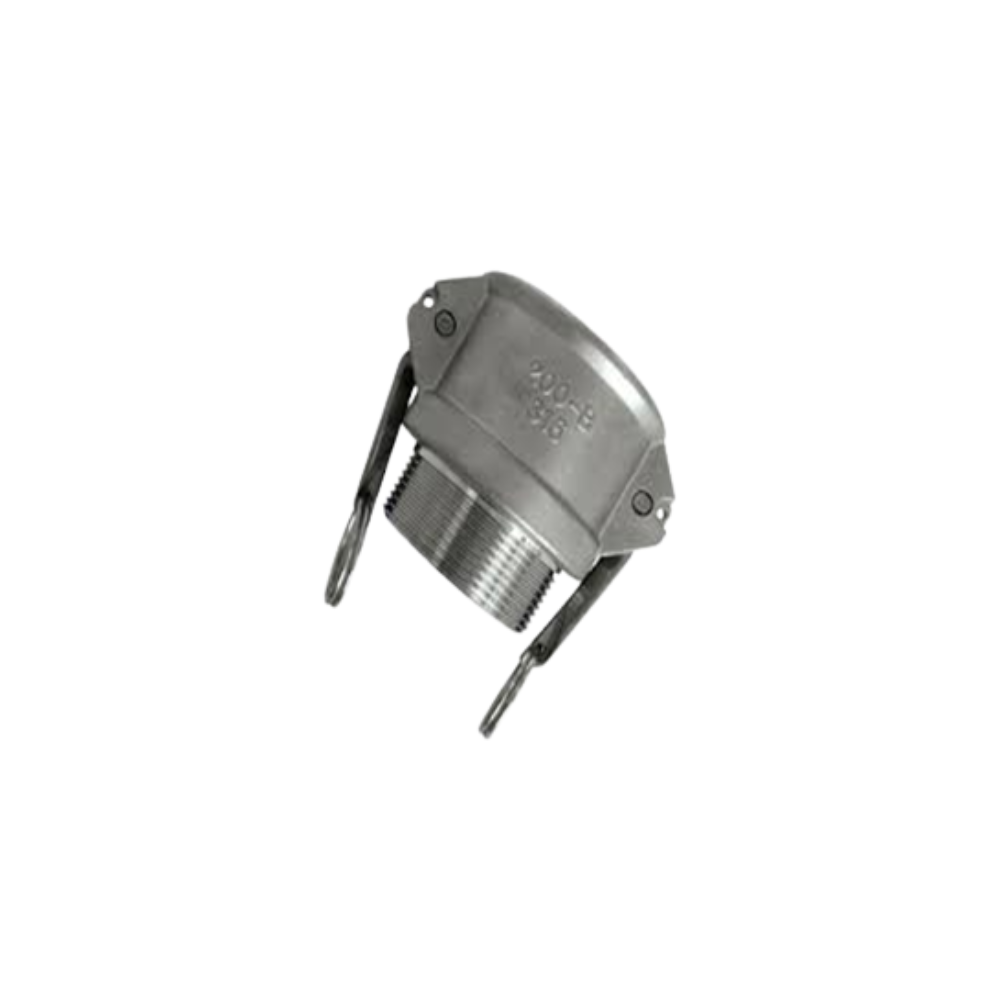
CAMLOCK TYPE B STAINLESS STEEL
Type B, female coupler with male thread.

Neoprene: strengths & limits
Neoprene is a chloroprene rubber, known internationally by the abbreviation CR. It was the first synthetic rubber to be produced commercially, and it generally offers good resistance to ozone, ageing and weathering, better than nitrile.
On the fluid side, it works with paraffin-based mineral oils, silicone oils and greases, water at low temperatures, refrigerants, ammonia and carbon dioxide. That makes it a practical choice for water and cooling lines.
Its limits are clear. Compatibility is limited with naphthenic-based mineral oils, light hydrocarbons such as propane, butane and fuels, and glycol-based brake fluids. It is not compatible with aromatic hydrocarbons such as benzene, chlorinated solvents such as trichloroethylene, or ketones, esters and ethers.
Viton: strengths & limits
Viton is a Chemours trade mark for a fluoroelastomer. The material belongs to the fluoroelastomer family, known internationally as FKM, which is why catalogues and specifications often list it simply as FKM.
Chemical resistance is its strong point. It works with mineral oils and greases, vegetable oils, petrol even with a high alcohol content, propane, butane and natural gas, aromatic hydrocarbons such as benzene and toluene, and chlorinated solvents. It also has very good resistance to ozone and weathering.
It is not the answer to everything, though. It is not recommended for glycol-based brake fluids, ammonia gas, amines, alkalis, superheated steam or low molecular weight organic acids such as formic and acetic acid. It also does not withstand polar solvents such as acetone, MEK and ethyl acetate.
When chemicals are transferred, the gasket is chosen together with a suitable food and chemical hose, so that the whole line can handle the same fluid.
Fluid compatibility table
The table brings together the main fluid groups. “Compatible” means the material is suitable, “Limited” means it needs checking for the specific application and “No” means it is not suitable.
| Fluid | Neoprene (CR) | Viton (FKM) |
|---|---|---|
| Paraffin-based mineral oils | Compatible | Compatible |
| Naphthenic-based mineral oils | Limited | Compatible |
| Fuels, propane, butane | Limited | Compatible |
| Aromatic hydrocarbons (e.g. benzene) | No | Compatible |
| Chlorinated solvents (e.g. trichloroethylene) | No | Compatible |
| Ketones and esters (e.g. acetone, MEK) | No | No |
| Ammonia | Compatible | No (ammonia gas) |
| Glycol-based brake fluids | Limited | No |
| Silicone oils and greases | Compatible | Compatible |
Temperatures
Temperature is the second criterion after the fluid. Neoprene works from about -40°C up to about 121°C. Viton reaches 204°C, and higher for a shorter service life, while at the low end it works down to -26°C, with some grades reaching -46°C.
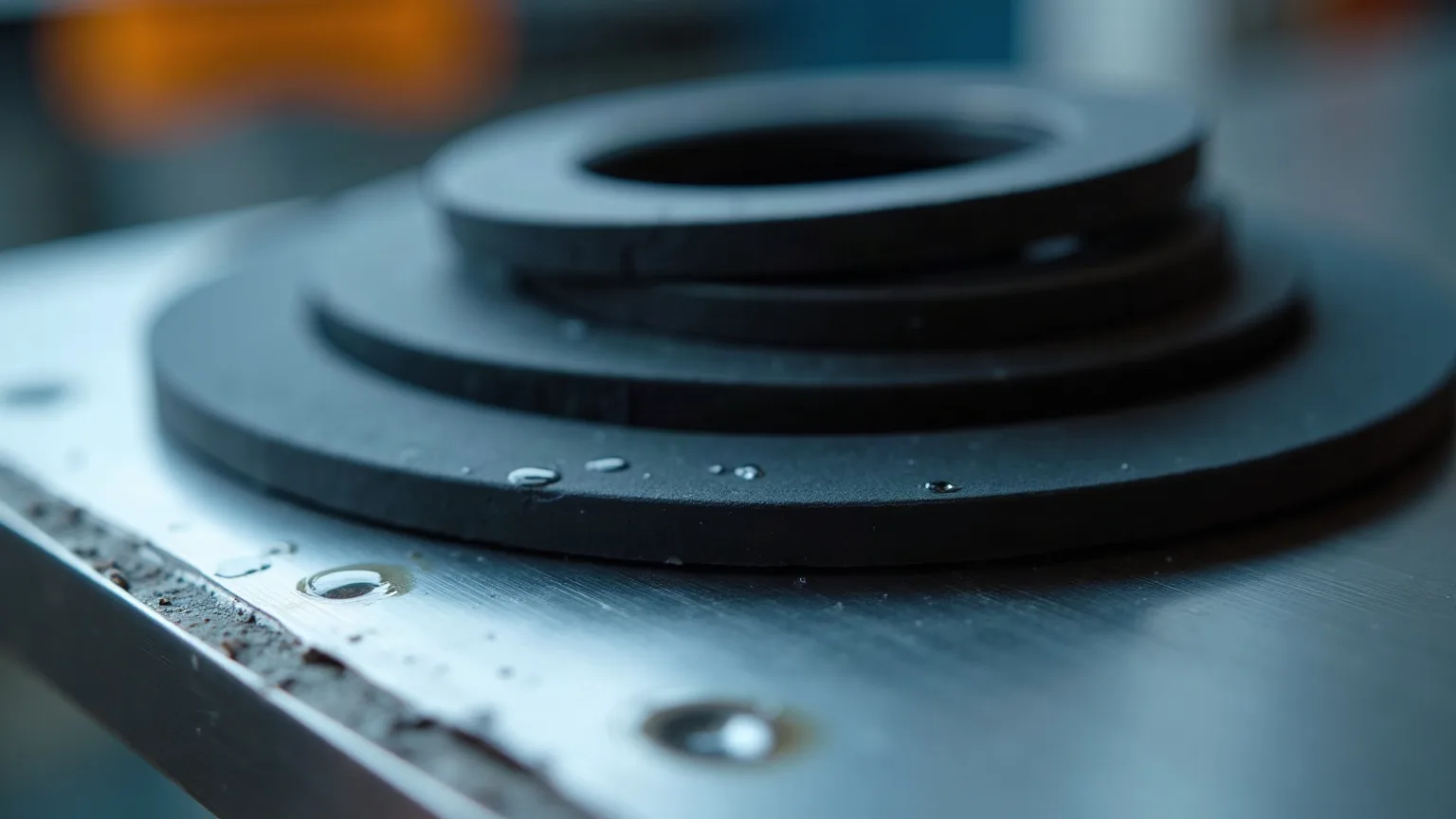
In practice, with hot oils, warm fuels or lines close to engines, Viton has headroom that neoprene does not. In the cold the opposite is true: neoprene stays flexible at lower temperatures than standard Viton grades.
High temperatures also speed up wear. The rubber hardens, loses its elasticity and starts to crack. A gasket that works close to its limit needs checking more often.
Replacement
The gasket is a consumable part and can be changed without changing the coupling. Check it at every connection, and always when the line drips with the arms closed.
Swelling or softening
The fluid has penetrated the material. Replace it with a gasket that is compatible with the fluid, not with an identical one.
Hardening or cracks
A sign of heat stress. If it keeps happening, you need a material with more temperature headroom.
Permanent deformation
The gasket has flattened under heat and pressure and does not spring back, so it no longer seals properly.
Damaged seat
Check the seat of the female half for scratches, dents or corrosion. With a damaged seat the coupling has to be replaced, not just the gasket.
A replacement is always a new gasket in the size of the coupling. For the sizes and types of the couplings themselves, see the full range of Camlock couplings.
Frequently asked questions
Neoprene or Viton gasket for a Camlock?
Is Viton the same as FKM?
What temperature can a Viton gasket withstand?
Which fluids is Viton not compatible with?
Sources
- Parker Hannifin, Parker O-Ring Handbook ORD 5700. https://www.parker.com/content/dam/Parker-com/Literature/O-Ring-Division-Literature/ORD-5700.pdf
- Freudenberg Sealing Technologies, FKM Material Rubber O-Ring Seals – What is FKM?. https://www.fst.com/materials/fkm/
- Chemours, Viton Fluoroelastomer Products. https://www.viton.com/en/products
- ERIKS, Neoprene / CR. https://o-ring.info/en/materials/neoprene-cr/
- Dixon Valve, Inspecting Dixon Cam and Groove Couplings. https://dixoninfo.dixonvalve.com/sites/default/files/documents/Inspecting-Dixon-Cam-Groove-Couplings.pdf
- Global O-Ring and Seal, Causes for O-Ring Failure. https://www.globaloring.com/causes-for-o-ring-failure/
Request a quote or information
Fill in the form and we will get back to you as soon as possible.