
BUYING GUIDE
Sandblasting hoses: choosing for construction sites and wear resistance
Sand, cement and mortar wear a hose away from the inside. Here is how to choose between a sandblasting hose, Draga and Gunite, what the bar ratings mean and when a hose needs replacing.
How do I choose a sandblasting hose? Start with the material that goes through it and the pressure of the installation. For abrasive blasting there is the antistatic sandblasting hose, for spraying plaster and concrete the Draga 40 and Draga 60, and for dry mix the Gunite. Then check the wall thickness and the coupling.
On a construction site, a hose that carries sand, cement or mortar does not wear like a water hose. The material scours its inside along every metre, and the right choice decides how long it lasts and how safe the job is.
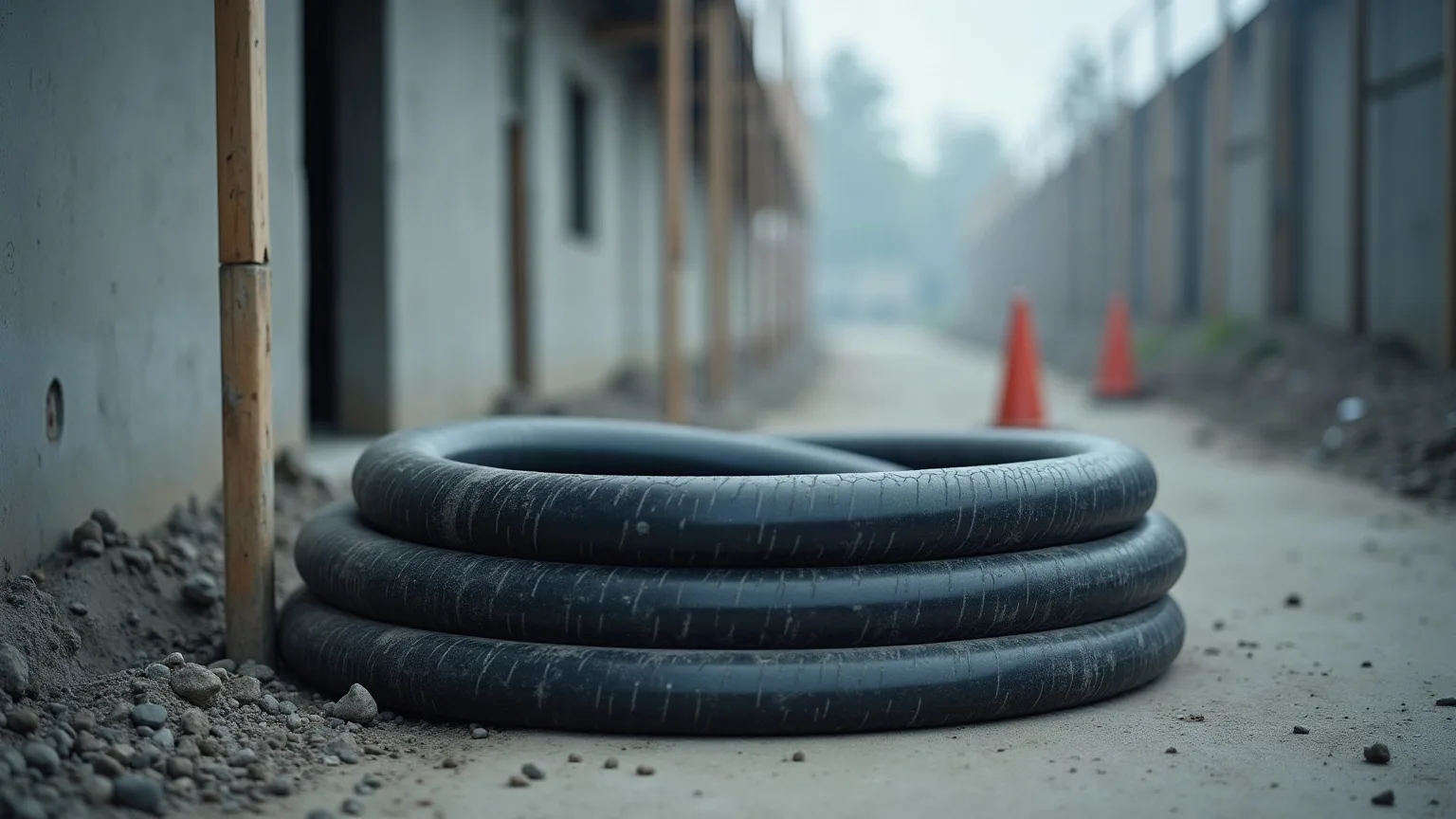
What wears a sandblasting hose
In abrasive blasting, an abrasive is propelled at high speed onto a surface by compressed air, water pressure or centrifugal force, to remove rust, mill scale and paint or to prepare the surface. The hose is the path that material travels, so it is the first to take the abrasion.
Three things wear it down. The first is abrasion on the inside, which is strongest at bends: a hose that works kinked or stays coiled on the ground develops wear spots. The second is pressure. The third is static electricity, which is dealt with by antistatic construction, and that is why the catalogue’s sandblasting hose is antistatic.
The sandblasting hose, the Draga and the Gunite all belong to the textile-reinforced rubber hoses for abrasive materials and differ in application and pressure. The main types and their coupling:

SANDBLAST HOSE
For blasting ships and machinery, -40/+70°C.
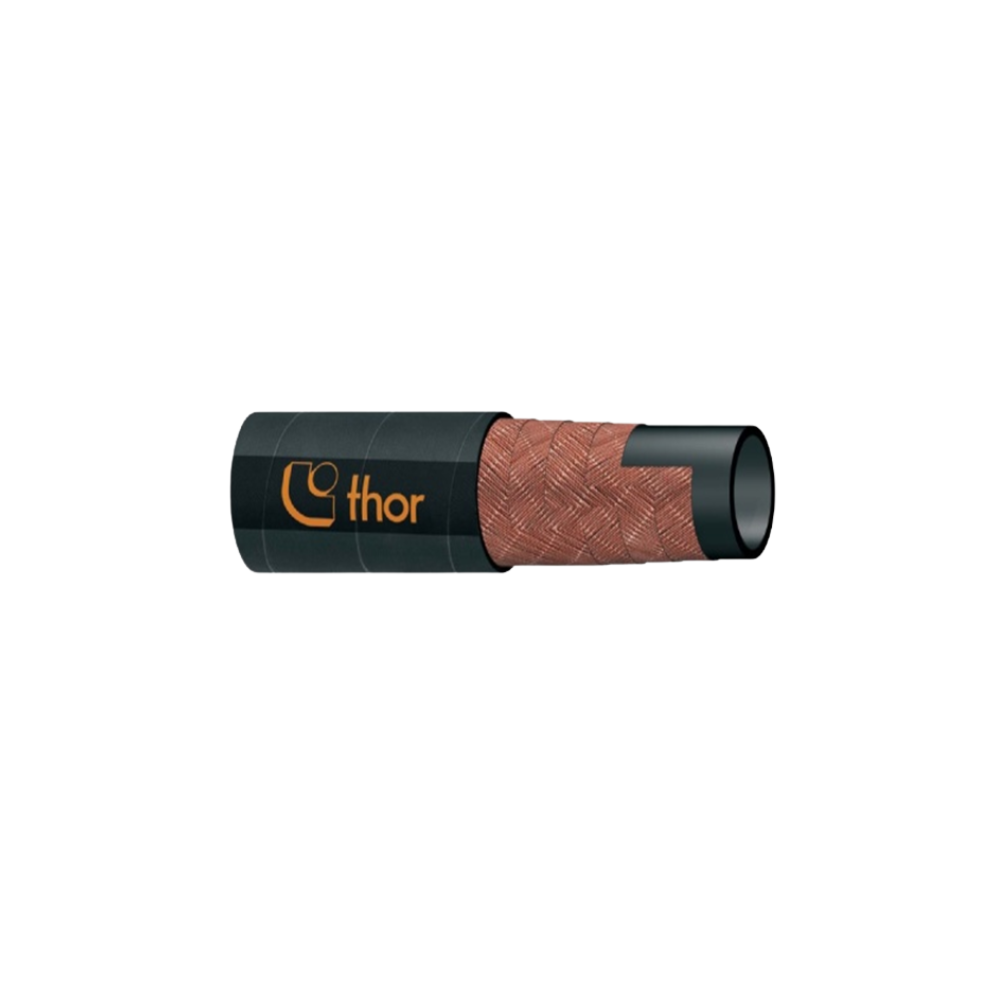
CEMENT PLASTER HOSE DRAGA 40 BAR
Black rubber hose with 4 textile plies, for spraying plaster and concrete.

DRAGA 60 GUNITE HOSES
Abrasion resistant, for dry cement, sand, plaster and mortar.

SANDBLAST COUPLING FOR HOSES
Quick-connect coupling, for each hose size.
Draga 40/60 bar
Draga hoses are made for spraying plaster and concrete and for any application with very high pressures, where the hose also acts as a safety hose. The Draga 40 is a black rubber hose with four reinforcing textile plies.
The catalogue gives the pressure as two numbers: 40-120 bar for the Draga 40 and 60-180 bar for the Draga 60. The second number is three times the first, which matches the 3:1 safety factor between working pressure and burst pressure for sandblasting hoses. The name Draga 40 or Draga 60 refers to the first number, and that is the figure to compare with the pressure of your installation.
The Draga 60 covers the same uses with higher strength. If the plaster or concrete pump works above 40 bar, the Draga 60 is the one to choose. For fluids under pressure, such as hydraulic oil or airless paint, there are the hydraulic, steam and paint hoses.
Gunite
The term gunite refers only to the dry-mix spraying method: the dry cement mix is blown through the hose to the nozzle, and water is added at the nozzle just before application. In the wet method, by contrast, a ready mix is pumped.
That is why a gunite hose is a special abrasion-resistant hose: dry, abrasive material moves through it with air, exactly as in sandblasting. The catalogue recommends it for spraying dry cement, sand, plaster, concrete and mortar.
The Gunite works at lower pressures than the Draga hoses, for example 12-36 bar, and at temperatures from -40 to +70°C. When the same line needs more pressure, the answer is the Draga 60, which covers the same uses.
Wall thickness
The wall is the wear reserve of the hose. The thicker it is, the more material the abrasion has to eat through before it reaches the reinforcing plies, and the better the hose stands up to being dragged over concrete and gravel.
In the catalogue, sizes are given as inner by outer diameter in millimetres, and the wall thickness is half the difference between them. For example, at 1 1/2″ the Draga 60 is 38×60, so it has an 11 mm wall, while the Gunite of the same size is 38×56, with a 9 mm wall.
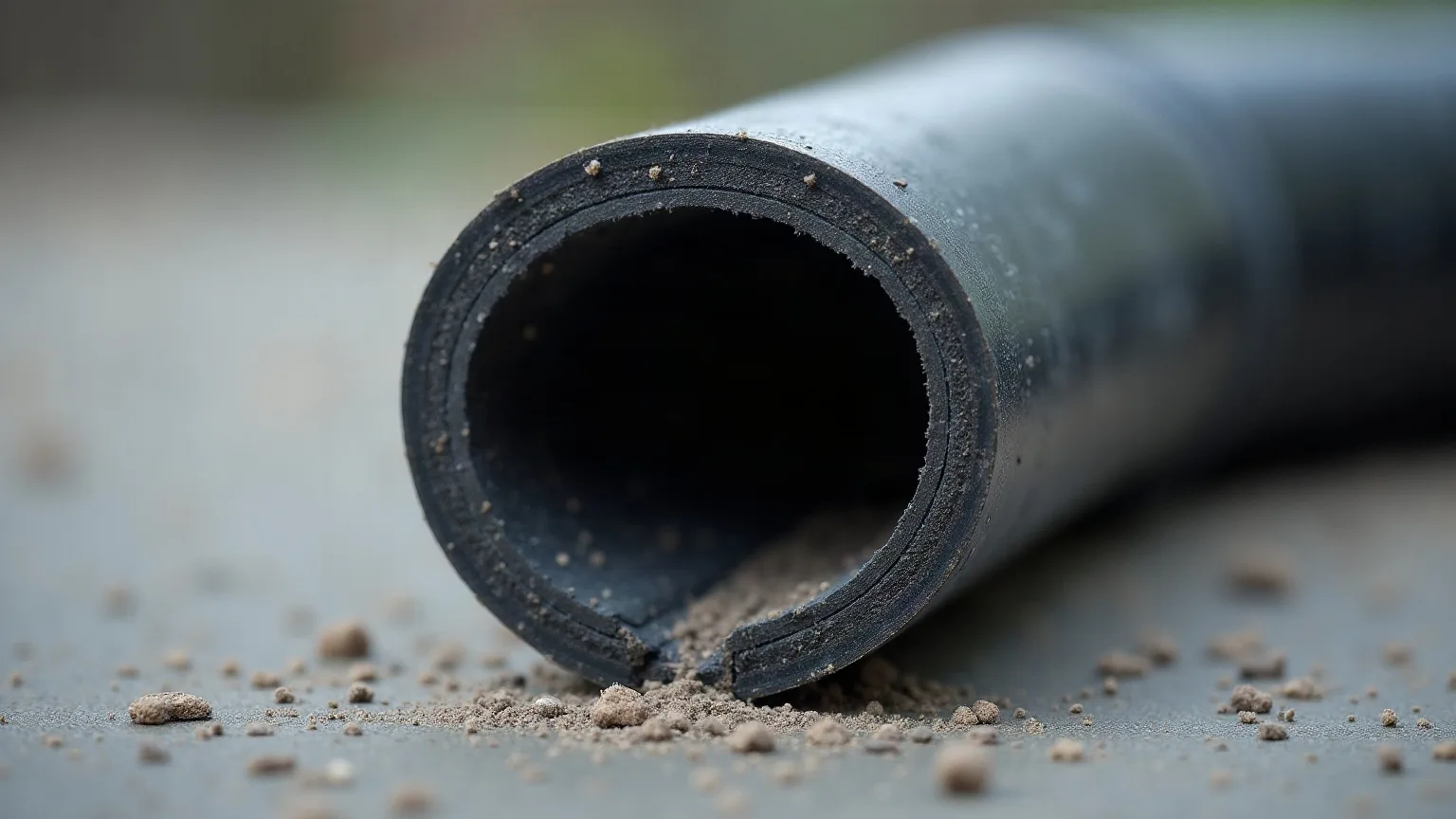
The inner diameter is set by the machine and the coupling, so it has to match both.
Couplings & connections
The coupling is the most sensitive point of the line. Sandblast couplings are chosen by the hose size, inner and outer, not just by the inch size: in the catalogue the same 1 1/4″ coupling exists for a 25×38 hose and for a 32×48 hose.
Among the sandblast couplings you will find quick-connect hose couplings, threaded couplings for the blast pot and straight threaded couplings without a quick-connect lug.
When fitting a coupling, its screws must not go through the inner lining of the hose, otherwise the coupling wears out early. Couplings must fit tightly to each other and to the hose, with no play, and the safety locks must engage fully. Where the hose is fixed onto the tail of a fitting, it is secured with hose clamps of the right diameter.
Wear & replacement
Check the hose daily and weekly, along its full length. The signs to look for are specific:
Soft spots
Walk the line and squeeze the hose. Where it gives easily, mainly near couplings and bends, the wall has worn.
Cracks and blisters
Splits, tears, blisters or holes in the outer cover mean the hose must be replaced.
Kinks easily
If the hose kinks easily, it is a sign that it has started to wear.
Coupling screws
If the screws have backed out or come loose, the coupling needs to be fitted again.
With several soft spots, cracks or blisters, replace the hose immediately. If the wear is local and close to the end, cut off the worn section and refit the coupling, but only if the connection stays safe.
To make the hose last longer, lay the line out as straight as possible, without tight bends, without crossing sharp edges and without surplus hose coiled on the ground. The blasting air comes from the compressor through its own hose, which you will find among the air, water and spray hoses.
View the abrasive material hoses →
Frequently asked questions
What is sandblasting?
What is gunite?
What is sprayed concrete?
What is a Draga hose?
What do the bar figures on a Draga hose mean?
Sources
- Workplace Health and Safety Queensland, Abrasive blasting. https://www.worksafe.qld.gov.au/safety-and-prevention/hazards/workplace-hazards/dangers-in-your-workplace/abrasive-blasting
- American Shotcrete Association, What is the difference between shotcrete and Gunite?. https://shotcrete.org/faq-items/what-is-the-difference-between-shotcrete-and-gunite/
- Semperit, SM3 2 ply sandblast hose. https://hoses.semperitgroup.com/products/industrial-hoses/abrasion-material-handling/sm3-1/
- Clemco Industries, Abrasive Blast Hose, Couplings, and Safety Cables. https://www.clemcoindustries.com/blast-hose/
- BlastOne, Blasthose Safety Checklist. https://www.blastone.com/wp-content/uploads/B5612_Blasthose-Safety-Checklist.pdf
- BlastOne, How to Prevent Premature Blast Hose Wear and Coupling Damage. https://www.blastone.com.au/how-to-prevent-premature-blast-hose-wear-and-coupling-damage/
Request a quote or information
Fill in the form and we will get back to you as soon as possible.