
EXPLAINER
Food hoses: FDA/EU certifications and safe selection
Food grade is not a stamp, it is a set of specific regulations. Here is what FDA, 1935/2004 and 10/2011 mean, what the letters A, B, C and D tell you and how to clean and store a food hose.
In short: the food hose certifications to ask for are compliance with Regulation (EC) 1935/2004 for all food contact materials, with Regulation (EU) 10/2011 when the hose is plastic and, for rubber hoses, with FDA 21 CFR 177.2600. Then check which food categories, A, B, C or D, the hose is suitable for.
A hose that carries wine, milk or drinking water is not judged on pressure alone. It is judged on what can pass from its material into the product, and that is exactly what the certifications answer.
What food grade means
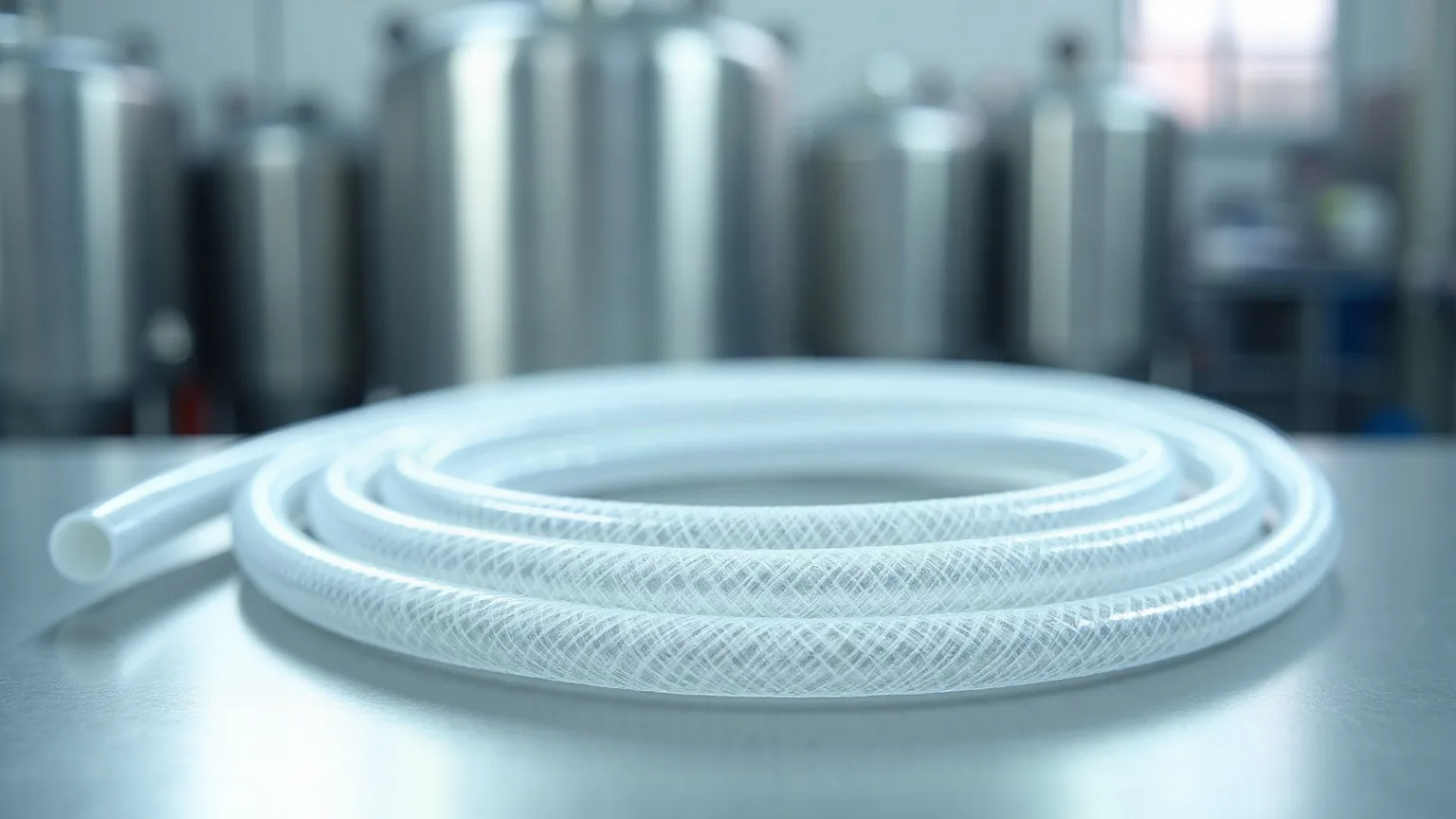
A food-grade hose is a hose that is suitable for contact with food. In Europe this means the material does not release constituents into the food at levels that endanger health, and it does not change the composition, taste or odour of the food in an unacceptable way.
The requirement covers everything that touches the product, not just the hose: the fittings, the seals and the Camlock gaskets on the connections.
Food grade does not mean “for any food”. A hose may be suitable for water and juices but not for oil, which is why the catalogue lists the food categories each hose covers. Some of the food hoses in the catalogue:

FOOD S&D HOSE NAFTA-POLIFOOD
Also for fatty foods, with EC 1935/2004 and FDA certificates.

NETTUNO PU FOOD SUCTION HOSE
Juices, drinking water, wine, drinks up to 15% and olive oil.

RED FOOD PVC SUCTION HOSE
Wine, juices, drinking water, A-B-C (not D).

CRYSTAL FOOD HOSE, HEAVY DUTY
Clear hose with textile ply and SGS/RoHS food certificates.
FDA/EU certifications
In the EU the basis is Regulation (EC) 1935/2004. It applies to all food contact materials and, besides the safety requirements, calls for labelling with an indication of use or the matching symbol, documents of compliance and traceability. Regulation (EC) 2023/2006 adds good manufacturing practice (GMP) at every stage.
Some materials also have specific measures. For plastics, such as PVC and polyurethane, Regulation (EU) 10/2011 applies. For rubber there is no equivalent specific EU measure, which is why rubber food hoses also cite other standards, such as BfR XXI or the 3-A 18-03 listed for the NAFTA-POLIFOOD. For solid foods, such as flour, sugar and cereals, the NAFTA-SFUCEM lists FDA, 1935/2004 and 2023/2006, with wire, textile plies and a brass antistatic earthing wire.
In the US, rubber articles intended for repeated use fall under FDA regulation 21 CFR 177.2600. It sets limits on the substances extracted from the surface: for aqueous foods up to 20 mg per square inch in the first 7 hours of extraction with distilled water, and for fatty foods up to 175 mg per square inch in the first 7 hours with n-hexane.
An “FDA specifications” label is useful, but for use in Europe ask for the 1935/2004 compliance documents as well.
Materials
Plastic food hoses, such as those made of PVC or polyurethane, are tested under 10/2011 with food simulants. The letters you see in hose specifications correspond to these simulants:
| Letter | Simulant | For foods |
|---|---|---|
| A | Ethanol 10% | Hydrophilic foods |
| B | Acetic acid 3% | Foods with a pH below 4.5 |
| C | Ethanol 20% | Alcoholic foods up to 20% |
| D1 | Ethanol 50% | Alcoholic foods above 20% and oil-in-water emulsions |
| D2 | Vegetable oil | Foods with free fats on the surface |
For dry foods the regulation defines a separate simulant, E.
So a hose rated A-B-C without D, such as the red MOSTO spiral hose, covers water, juices, wine and low-alcohol drinks, but not fatty foods. The same goes for the clear HELISTEEL food hose with a steel wire spiral, which also cites NSF certification for drinking water. The catalogue’s plastic food spiral hoses are listed among the PVC suction and delivery hoses.
Rubber food hoses are made from elastomers, such as the EPDM of the NAFTA-POLIFOOD, and in the catalogue they have textile plies and wire reinforcement. For milk, fats and oily products there are the blue NAFTA IGENOIL and TUGINOIL hoses. The full range is in the rubber and PVC hoses.
Cleaning & hygiene
Rinse the hose straight after use and let it drain completely. Cleaning starts with hot drinking water and continues with a detergent and a disinfectant that suit both the product and the hose material.
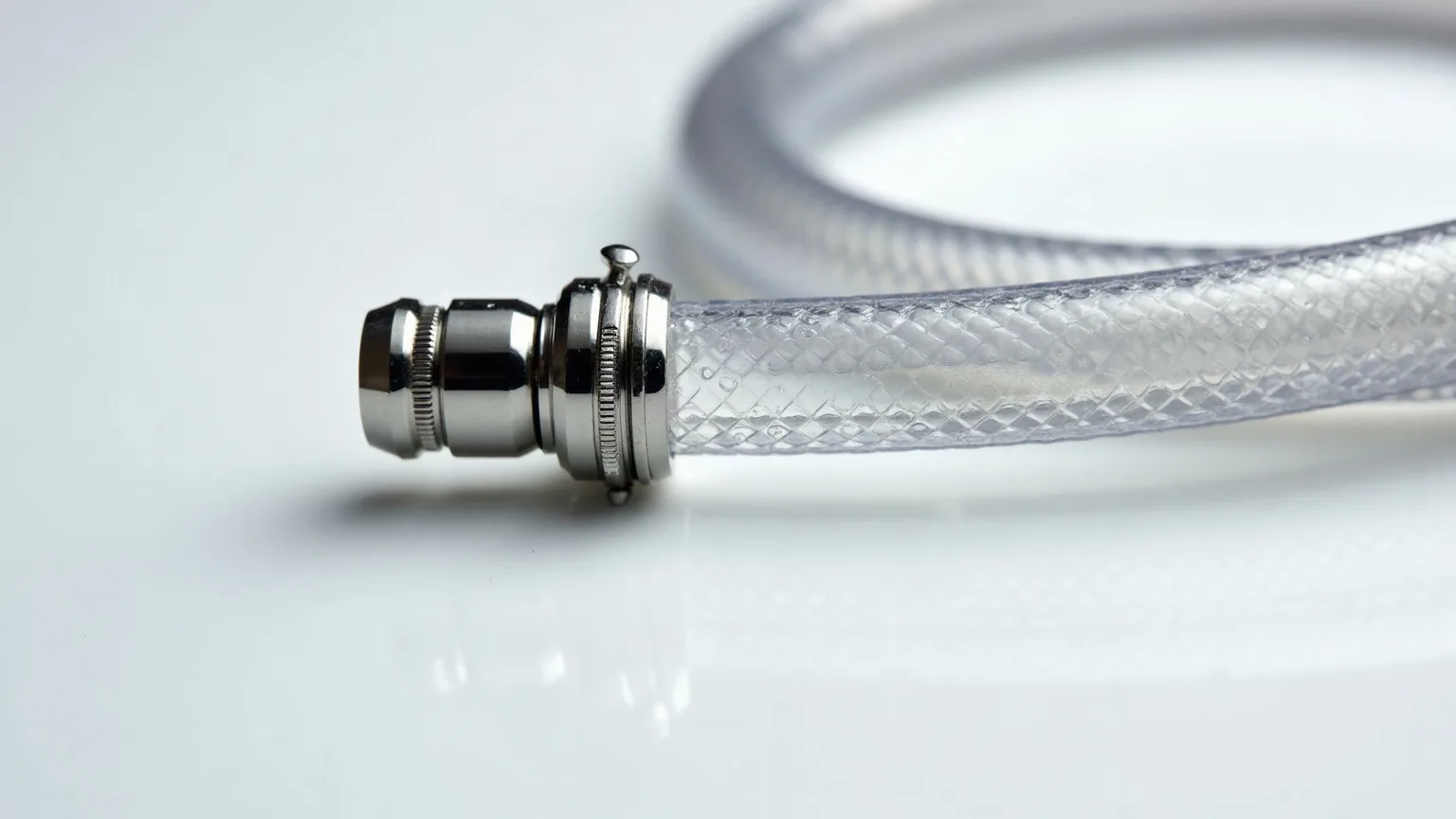
As a guide, for plastic food hoses a 20-minute rinse with hot water or detergent solution at 50-65°C, always above 43°C, is recommended, followed by a second rinse to remove any residue. Sanitising can be done, for example, with a caustic soda solution of up to 2% at 55-75°C for 20 minutes, followed by a rinse with drinking water for at least 30 minutes. The instructions of the hose manufacturer always apply.
Steam needs care, because the limits differ by material: e.g. NR and NBR up to 110°C for 10 minutes, EPDM up to 130°C for 30 minutes and silicone up to 135°C for 18 minutes. Always follow the limit of the specific hose.
Inspect the inner surface regularly and replace the hose before it shows defects or peeling. For cleaning in place (CIP), first confirm that the hose is chemically compatible, and check the result of the cleaning regularly so that no residue is left behind.
Beverage applications
In beverage production, the hose is chosen by alcohol content. Simulant C covers drinks up to 20% alcohol, while for drinks above 20% the material must have been tested with D1.
The limit stated on the hose itself matters too. The catalogue’s MOSTO and NETTUNO PU hoses are intended for wine and alcoholic drinks up to 15%, while the NAFTA-POLIFOOD lists beers, fruit juices and drinking water.
During transfers, what applies to the hose also applies to the pump. The catalogue’s LIVERANI stainless steel pumps with a non-toxic rubber impeller are intended for transferring food, oils, brine and seawater.
Storage
After cleaning, the hose must not hold any liquid. Hang it so that it drains completely, without stretching it and without hanging several hoses together.
For longer periods, store it in a dark, cool place with the ends closed with plastic caps. A new hose is cleaned before its first use to remove any odour. This is done in stages: the hose is filled with hot water and left full for at least 10 hours, then cleaned, and finally rinsed with drinking water.
Frequently asked questions
What is the FDA?
What does Regulation 1935/2004 require?
What is Regulation 10/2011?
What is a food hose?
What does FDA approved mean on a hose?
Sources
- European Commission, Food contact materials – Legislation. https://food.ec.europa.eu/food-safety/chemical-safety/food-contact-materials/legislation_en
- Commission Regulation (EU) No 10/2011, Annex III. https://www.legislation.gov.uk/eur/2011/10/annex/III
- Legal Information Institute, 21 CFR 177.2600 – Rubber articles intended for repeated use. https://www.law.cornell.edu/cfr/text/21/177.2600
- Parker Hannifin, Guidelines for Cleaning and Sanitizing Food Hoses. https://images.solutions.parker.com/Web/Parker/%7Bd96f334d-9575-4718-89a5-94d9422806b2%7D_Food_Hose_Cleaning_Guidelines.pdf
- IPL, Cleaning and Sanitation Procedures for Food Grade Hoses. https://www.iplhoses.com/wp-content/uploads/2025/11/CLEANING-AND-SANITATION-PROCEDURES-FOR-FOOD-GRADE-HOSES.pdf
- CPE Systems, Hose Care Guide. https://www.cpesystems.ca/cdn/shop/files/Hose_Care_Guide_4a2d22ad-bb36-455e-aa11-b7e9c5a25a34.pdf
Request a quote or information
Fill in the form and we will get back to you as soon as possible.