
Comparison
When you need a stainless hose clamp instead of galvanised
The same clamp costs several times more in stainless. Here is where the difference earns itself back, where it is wasted, and which environments leave you no choice.
Side by side on the shelf they look identical. Same band, same screw, same clamping range. The difference shows up two years later, when one unscrews normally and the other has turned into a lump of rust that snaps in your hand.
Choosing between the two materials is not a question of quality but of environment. Below is how each behaves and where the line sits beyond which stainless stops being a luxury.
The galvanised clamp
A galvanised clamp is carbon steel with a zinc coating. The zinc is not simply paint: it is sacrificed before the steel, so even if the surface is scratched, that spot stays protected for a while.
That while does come to an end. Once the coating is consumed, the steel underneath is exposed and rust begins. In a dry indoor space, away from moisture and chemicals, that cycle takes many years. In a wet or outdoor environment it shortens dramatically.
Where it sits comfortably: pneumatic circuits in enclosed spaces, low pressure water lines in indoor installations, temporary connections, and any application where the clamp is accessible and easy to replace.
The stainless clamp
Stainless steel protects itself differently. The chromium in the alloy forms an extremely thin oxide film on the surface, and that film reforms by itself every time the surface is scratched. There is no coating to wear away – the protection is inside the material.
That is why a stainless clamp copes with moisture, washdowns, cleaning agents and outdoor exposure without changing behaviour. And that is why it costs more: the alloy itself is a more expensive raw material.
The difference between 304 and 316
Stainless is not one material but a family of alloys. In hose fittings you mostly meet two grades.
304 is the classic chromium-nickel alloy at roughly 18% chromium and 8% nickel. It comfortably handles moisture, water, food contact and most industrial environments. It has one specific weakness: chlorides. Salt attacks the protective film locally and creates pitting, small holes that travel inwards while the surrounding surface still looks clean.
316 adds 2 to 3% molybdenum, which strengthens exactly that resistance to chlorides. Its pitting resistance index rises from roughly 18–20 for 304 to 24–28. It is the grade specified wherever there is seawater, salt air or chloride-bearing solutions. The grade is stated in each clamp’s specification, so it is worth checking rather than assuming.
Hose clamps
Light and heavy duty, in galvanised and stainless versions.
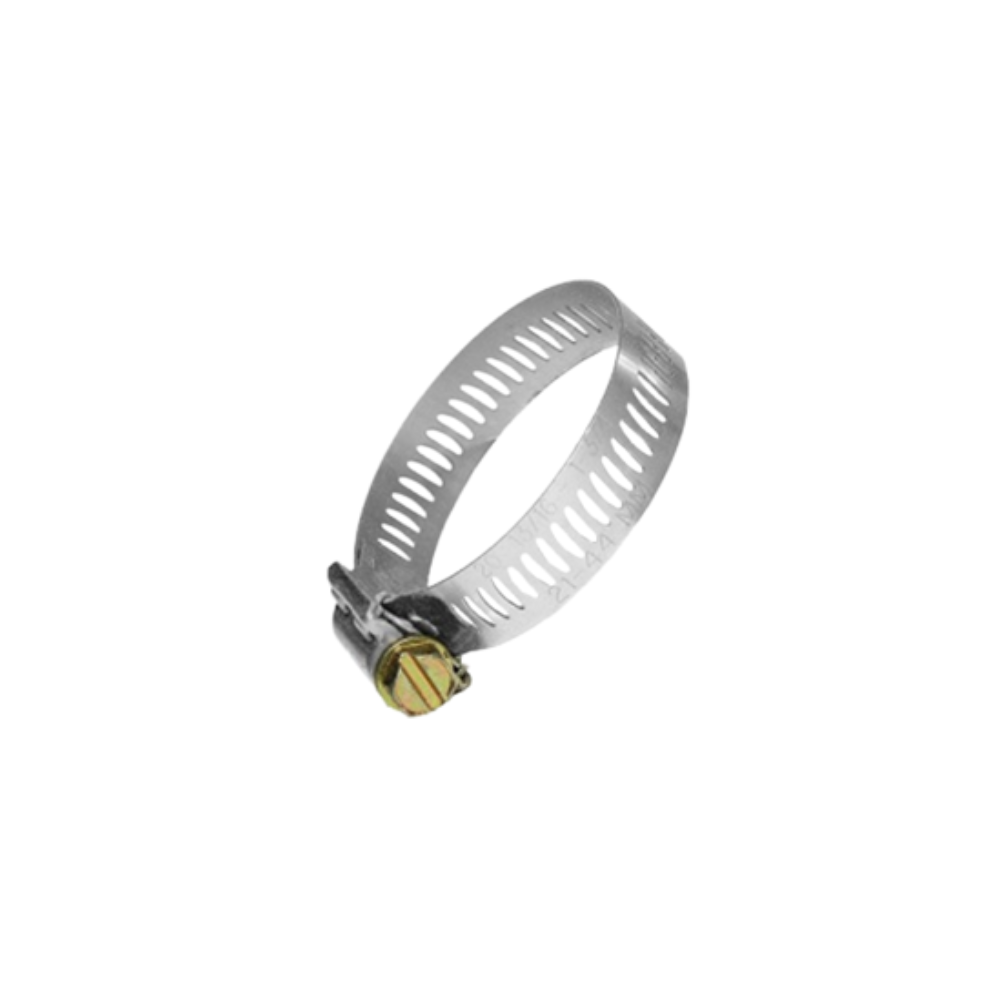
HOSE CLAMPS TYPE A GALVANIZED
Screwdriver-tightened clamp for indoor installations.
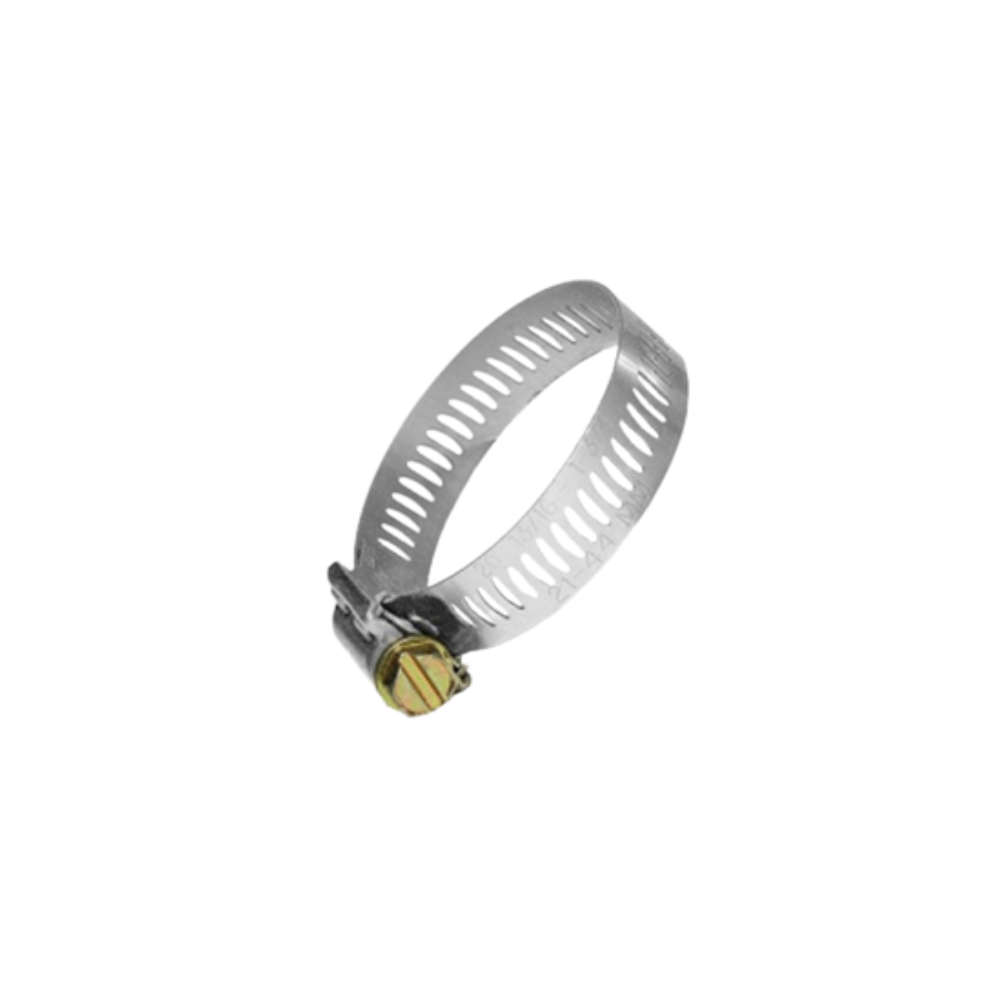
HOSE CLAMPS TYPE A STAINLESS STEEL
The stainless version for moisture and outdoor exposure.
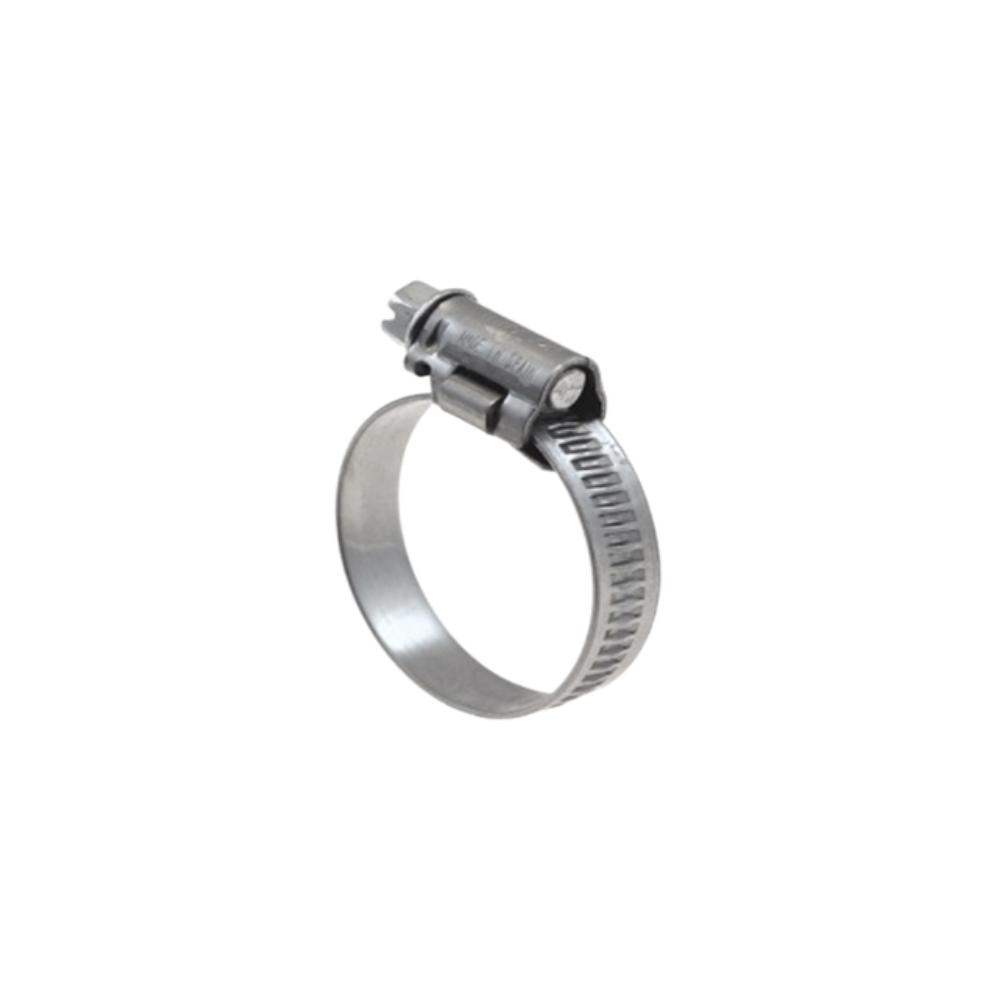
MIKALOR HOSE CLAMPS STAINLESS STEEL
Stainless light duty clamp.
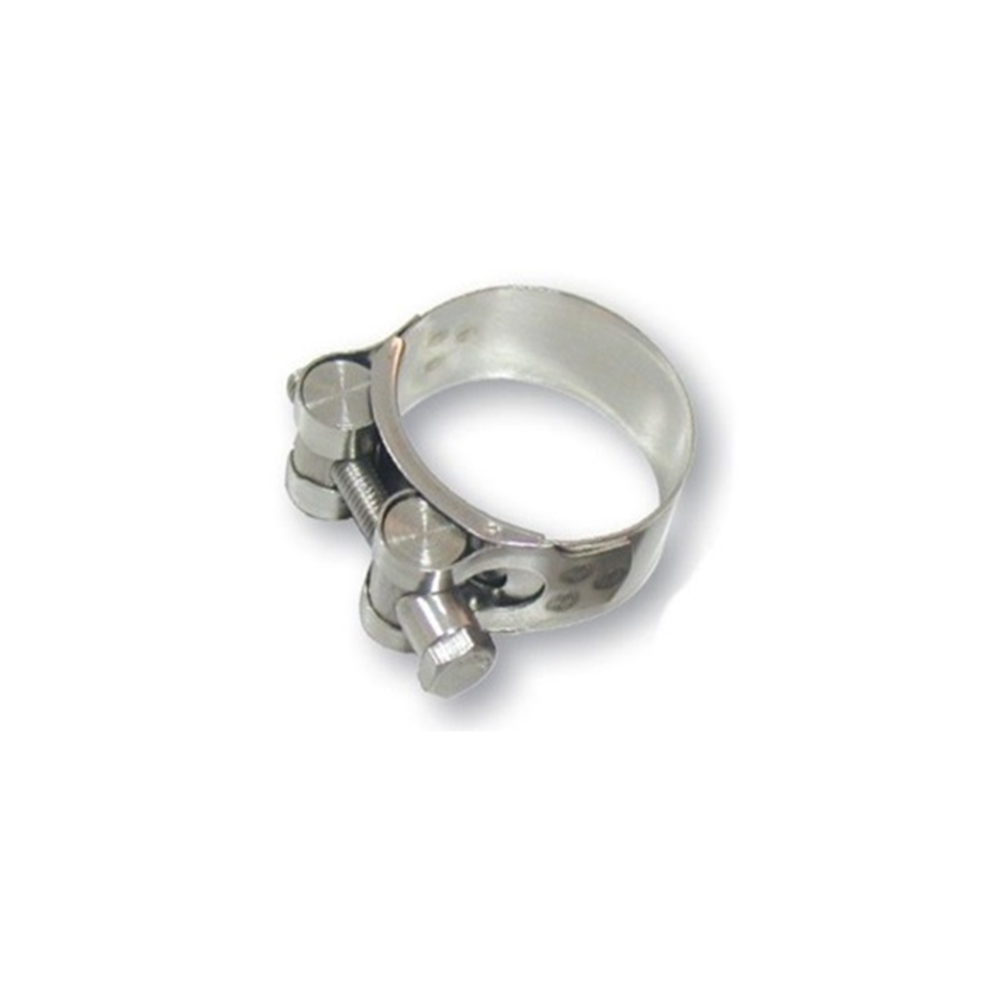
FR HOSE CLAMPS HEAVY DUTY STAINLESS
Spanner tightened, for demanding connections.
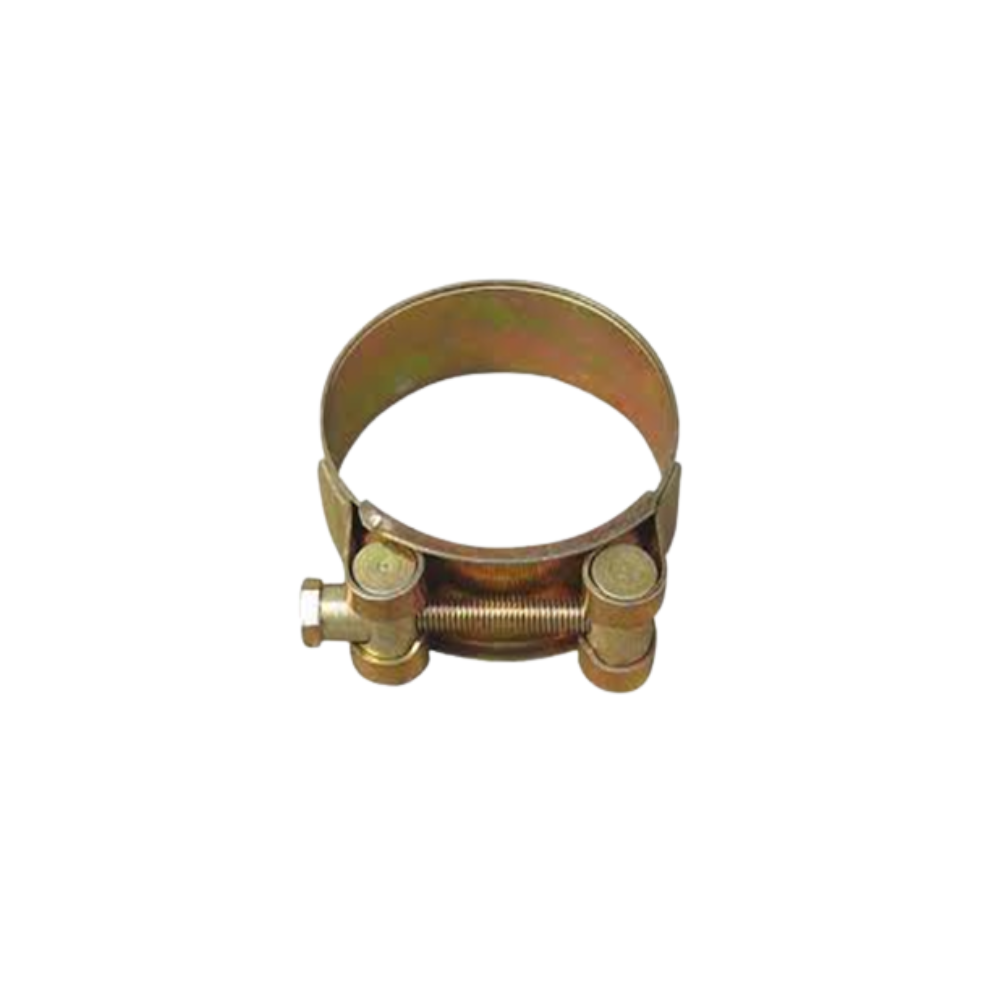
MIKALOR HOSE CLAMPS HEAVY DUTY GALVANIZED
The economical heavy duty choice for dry environments.
Marine, food and chemical environments
Three environments turn the decision from “preferable” into “necessary”.
Marine. The clamp does not need to get wet. Air near the sea carries enough salt to attack a galvanised fitting within months. On boats and coastal installations stainless is the only route, alongside the rest of the brass marine fittings.
Food and beverage. Here the issue is not only durability but hygiene. Surfaces are washed often, frequently with hot water and disinfectants. A rusted surface cannot be cleaned and has no place on a food line.
Chemicals. Acids, alkalis and solvents attack a zinc coating very quickly. Which alloy resists which chemical is not a general rule, so the match is made against the specific fluid in the installation.
Cost against service life
Comparing unit price is misleading. What counts is the cost of replacement: the technician’s time, the line standing still, the hose that may be ruined when a seized clamp has to be cut off.
The practical rule is simple. If the clamp sits somewhere hard to reach, or if its failure stops production, the extra cost of stainless is recovered by the first replacement that never happened. If it is in a dry, accessible spot and swaps out in five minutes, galvanised does the job with no reason to pay more.
Decision table
| Environment / application | Choice | Why |
|---|---|---|
| Dry indoor space | Galvanised | Without moisture the coating lasts many years |
| Outdoor exposure, rain | Stainless | Constant moisture consumes the zinc |
| Marine, boats, coastal | Stainless with molybdenum (316) | Chlorides attack even 304 |
| Food, beverage, pharma | Stainless | Cleanable surface, frequent washdowns |
| Chemicals and solvents | Case by case | Resistance depends on the specific fluid |
| Hard to reach position | Stainless | Replacement cost exceeds the price difference |
| Temporary connection | Galvanised | Corrosion has no time to appear |
See also the galvanized fittings and the full range under hose accessories.
Frequently asked questions
What is the basic difference between a galvanised and a stainless clamp?
Do I definitely need stainless near the sea?
How does 304 differ from 316?
Is a stainless band on its own enough?
Is the extra cost of stainless worth it?
Request a quote or information
Fill in the form and we will get back to you as soon as possible.