
Comparison
How to choose a fire hose and how many bar you need
The outer jacket, the inner lining and the working pressure are three separate decisions. Here is what each one means and which hose suits where.
Fire hoses are usually chosen on two criteria: colour and price. In practice what determines how long one lasts and where it is allowed to work is the material of the inner lining and the certified working pressure.
Below, the three parts of that decision are separated out, based on the real specifications of the hoses in the catalogue.
What a fire hose is made of
Every layflat fire hose is two things at once. On the outside there is a woven polyester jacket that takes all the mechanical punishment: dragging over ground, pulling, corners. On the inside there is a watertight lining that holds the water and provides the pressure rating.
The confusion between “polyester” and “synthetic” comes from here. The jacket is polyester on almost every hose – what changes from model to model is the inner lining.
The catalogue carries two solutions. The first is synthetic rubber, often impregnated with a polyurethane emulsion, as on the ATLAS hoses. The second is thermoplastic polyurethane (TPU), as on the PORTO range. Synthetic rubber gives a more flexible body that rolls easily; TPU gives a smooth internal surface and good resistance to ageing.
Working pressure of 8, 15, 18 and 20 bar
Two figures accompany every hose: working pressure and burst pressure. The first is the limit of normal use, the second the point of failure under test. On the 15 bar hoses the burst pressure is 45 bar, while on the 18 bar hoses it reaches 55 bar.
| Working pressure | Burst pressure | Typical use |
|---|---|---|
| 8 bar | – | Light applications, low pressure demands |
| 15 bar | 45 bar | The standard choice for hose reels and general use |
| 18 bar | 55 bar | More demanding networks, wider safety margin |
| 20 bar | 60 bar | Heavy professional use, maximum service life |
The selection rule: the working pressure of the hose has to cover comfortably the pressure the network or pump can develop, not simply the pressure you measure under normal conditions. It is the pressure surges when a nozzle closes abruptly that really do the damage.
White or red
In the catalogue the two versions of the same range carry identical specifications. The 18 bar ATLAS in white and the 18 bar ATLAS-C in red share the same polyester construction, the same internal reinforcement and the same certification. The same applies to the UNI-A and UNI-C pair at 15 bar.
Colour, then, is not a technical characteristic but a practical one. Red stands out visually and reads immediately as fire equipment. White shows dirt straight away, which helps visual inspection, and is preferred in many installations for consistency. Choose on what makes life easier for your people.
Certifications
The marking that carries substance is EN 14540, the European standard for non-percolating layflat fire hoses for fixed systems – the ones installed in hose reels and fixed networks. It covers internal diameters from 25 to 52 mm. The hoses in the catalogue carry this certification, with certain ranges covering it up to 2″.
Some models, such as the PORTO range, additionally carry RINA certification, which relates to marine use. If the installation is on a ship or a boat, that is the marking that counts.
Fire hoses
The catalogue range, from 8 to 20 bar, in white and red.
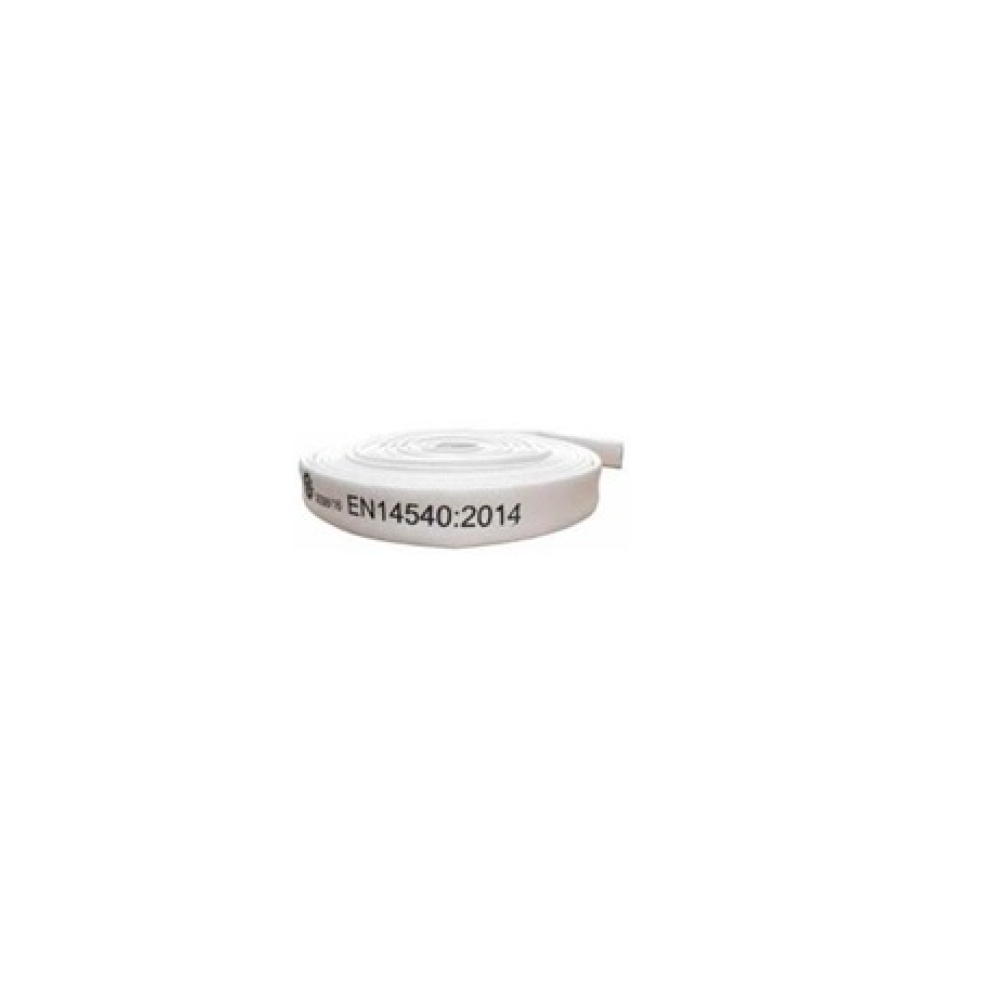
“UNI-A / UNI-AN” FIRE FIGHTING HOSE 15 BAR
15 bar working, 45 bar burst, to EN 14540.
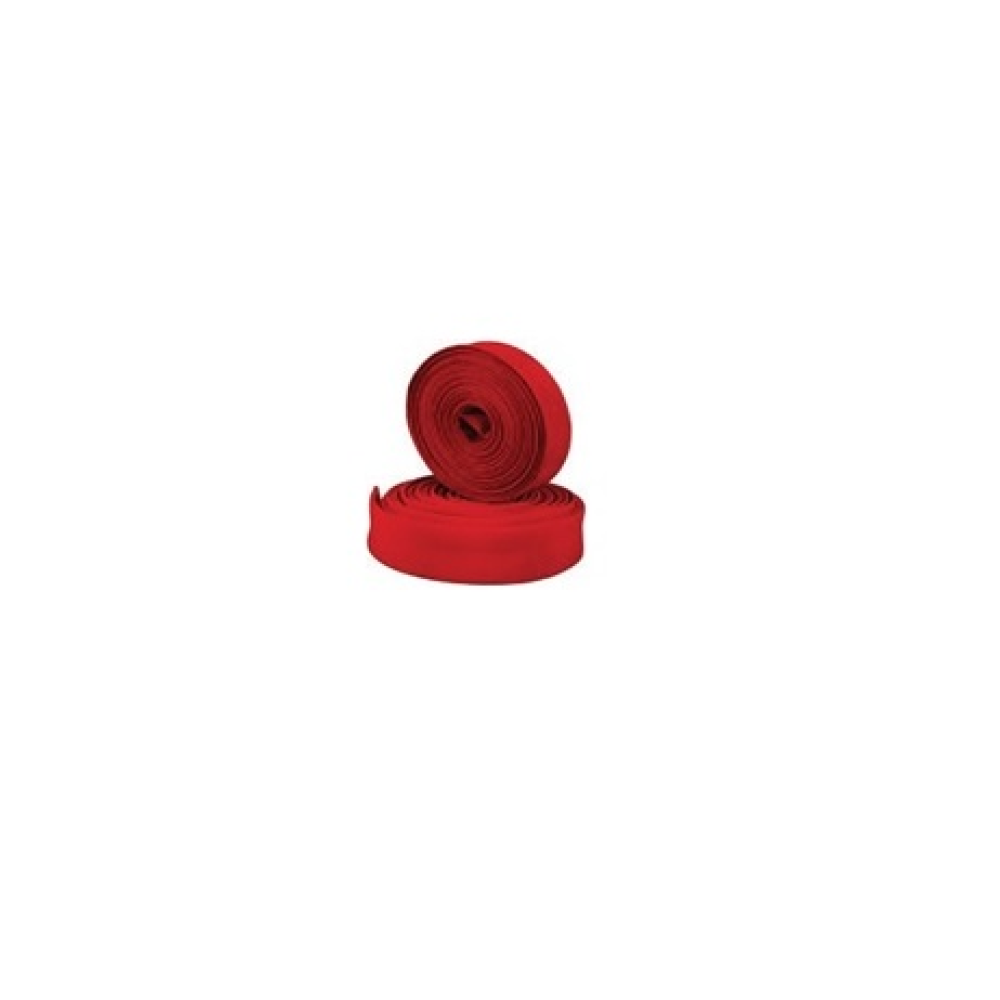
“UNI-C / UNI-CR” FIRE FIGHTING HOSES 15 BAR
Same specification as the white version, in red.
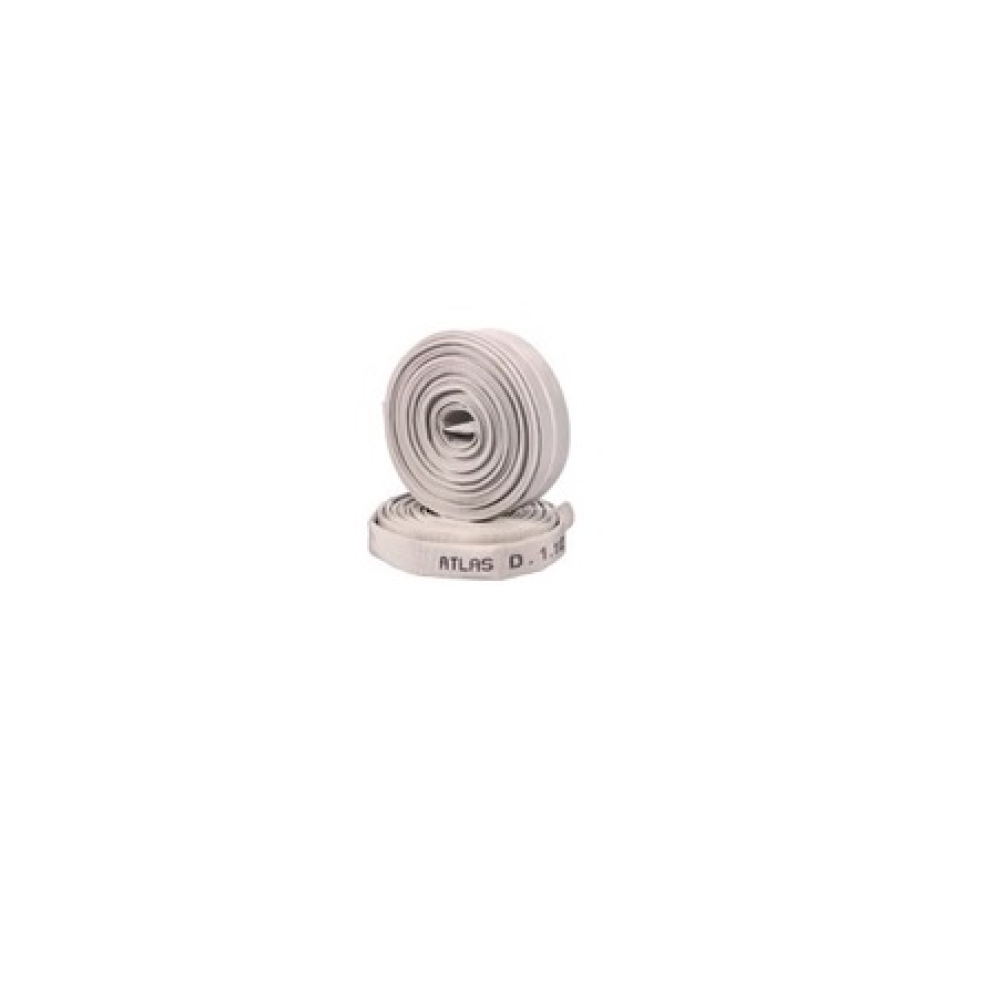
“ATLAS” FIRE FIGHTING HOSES 18 BAR
Polyester jacket with synthetic rubber internal reinforcement.
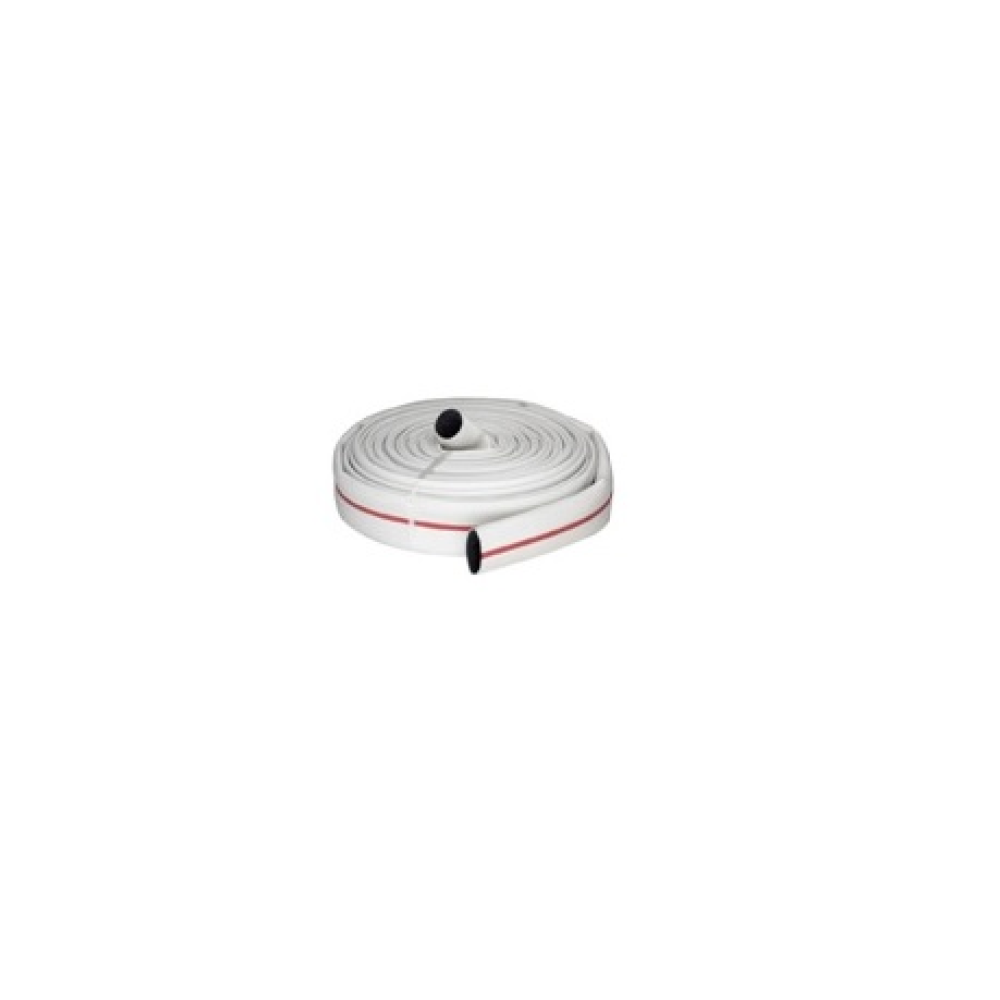
“PORTO” FIRE FIGHTING HOSES 15 BAR
Thermoplastic polyurethane internal reinforcement.

Diameters and lengths
Diameter sets the flow. A larger diameter means more water with lower pressure loss along the line, but also a heavier hose that is harder for one person to handle. The choice is made together with the nozzle and the Storz coupling that will terminate it, so everything matches in size.
On lengths, the UNI ranges come in rolls of 15, 20, 25, 30 and 60 metres. Prefer a single length that covers the distance rather than two joined together: every connection adds a potential leak point and a pressure loss.
Care and inspection
What kills a fire hose is not use but storage. A hose rolled up wet and left that way grows mould in the jacket and loses strength at the points that stay damp.
Drying
After every use, rinse and let it dry completely before rolling it up.
Visual check
Unroll fully and inspect for damage, cuts in the jacket and signs of abrasion.
Change the fold
Roll it periodically with a different fold so the crease does not become permanent in one place.
Check the ends
Check the tightness at the couplings and the condition of the gasket in the quick couplings.
The end connections are made with binding wire or with clamps suited to layflat hose, and should be inspected along with the body.
Frequently asked questions
What is the difference between a polyester and a synthetic hose?
How many bar should my hose be rated at?
Is there a technical difference between a red and a white hose?
What does EN 14540 certification mean?
How should a fire hose be stored?
What is a hydrant/coupling spanner wrench used for?
Request a quote or information
Fill in the form and we will get back to you as soon as possible.